

How to Apply Self-Tan for a Natural, Streak-Free Glow
Most streaky, patchy or orange-looking self-tan results come down to skin prep, not the product itself. Exfoliate 24 hours beforehand, moisturise dry areas like ankles, knees and elbows a couple of hours before applying, then work the product in with a mitt using long, even strokes. Give it time to develop fully before dressing or showering, and you get a natural-looking glow with far less risk of patches.
In this article
- Prepping your skin the night before
- How to apply for even coverage
- Common mistakes that cause streaks
- Aftercare and making it last
- FAQ
Prepping your skin the night before
Exfoliate about 24 hours beforehand. Use a mitt or gentle scrub to remove dead skin cells, focusing on drier areas like elbows, knees, ankles and hands. Giving your skin a day to recover after exfoliating helps the tan develop more evenly rather than clinging to rough patches.
Skip oil-based products beforehand. Oils and heavy balms can create a barrier that stops self-tan from developing properly, so stick to a water-based or oil-free exfoliator and moisturiser in the lead-up.
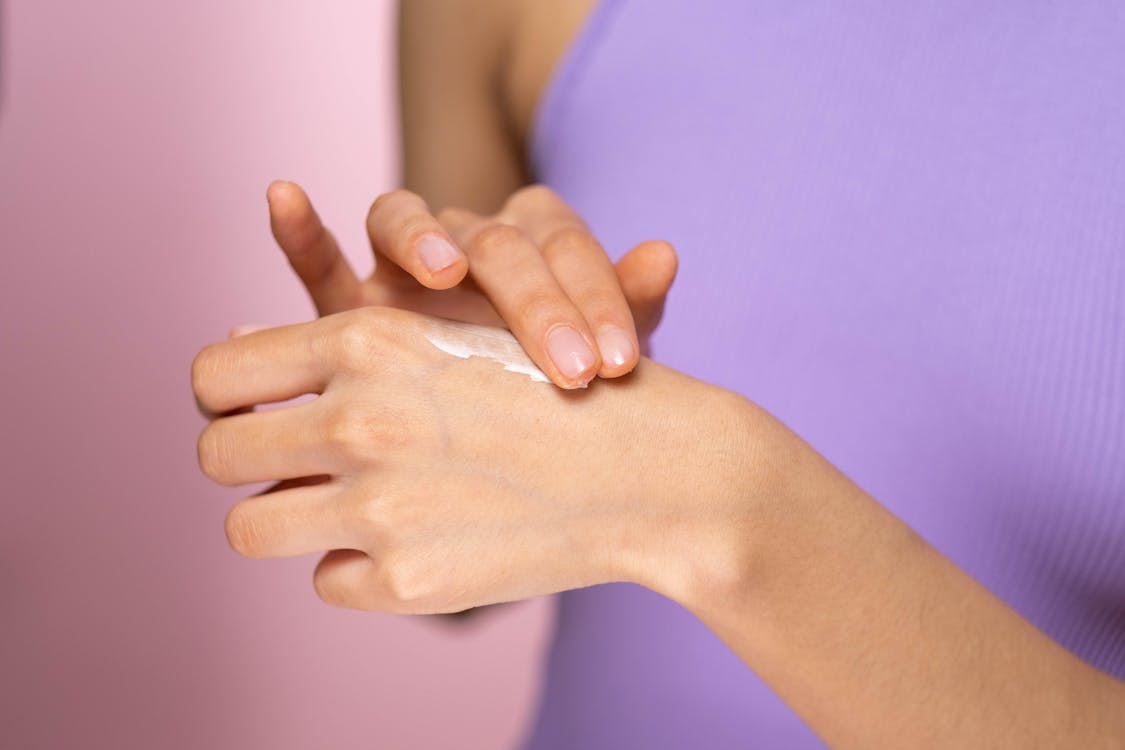
Moisturise dry areas a couple of hours before applying. Hands, feet, elbows and knees tend to absorb more product than the rest of the body, which is what causes those areas to go noticeably darker. A light, oil-free moisturiser on just these spots, applied a couple of hours ahead and fully absorbed, helps even things out.
How to apply for even coverage
1. Start from the feet and work upward. This is easier to manage and helps you keep track of where you've already covered.
2. Use a tanning mitt. A mitt spreads product evenly and keeps it off your palms, which is one of the most common places self-tan visibly goes wrong.
3. Work in small sections with circular motions. Blend thoroughly at the edges of each section before moving to the next, so you don't end up with visible lines where sections meet.
4. Go lighter over knees, ankles and elbows. These areas develop colour faster since skin is drier and more absorbent there, so a thinner layer helps them match the rest of your body rather than turning noticeably darker.

A lightweight mist for face and body, formulated to help build a natural-looking tan with a streak-free finish.
Common mistakes that cause streaks
Applying too much product in one go. A thick layer doesn't mean a darker, longer-lasting tan, it just increases the risk of uneven patches and transfer onto clothes or sheets before it has dried.
Not washing your hands after applying. Even with a mitt, residue can end up on your palms. Wash them thoroughly straight after, or you risk visibly darker palms and fingers.
Getting dressed or showering too soon. Most formulas need time to develop fully. Check your specific product's guidance and avoid tight clothing or sweating heavily until it's had time to set.
Skipping a patch test. Everyone's skin reacts slightly differently. A small patch test 24 to 48 hours before your first full application is a simple way to check how your skin responds before committing to an all-over application.


A lightweight daily body lotion designed to hydrate skin while gradually building a natural-looking glow.
Aftercare and making it last
Once your tan has developed, switch to a light, oil-free moisturiser daily to keep skin hydrated without breaking down the colour too quickly. Pat rather than rub when drying off after a shower, and avoid long soaks in hot water, which can fade a tan faster than normal daily washing. A gradual bronzing lotion used every couple of days is a low-effort way to top up colour between full applications.
One important point worth being clear about: self-tanning products do not contain sun protection unless specifically labelled as doing so, and colour on the skin is not an indicator of UV protection. Continue using a proper sunscreen if you're spending time outdoors, regardless of how tanned your skin looks.
Frequently asked questions
How long before I should shower after applying self-tan?
This depends on the specific product, so always check the guidance on your bottle. Many formulas need at least a few hours to develop fully before rinsing off the initial guide colour.
Why do my knees and elbows always go darker than the rest of my body?
These areas are naturally drier and more absorbent, so they soak up more product. Moisturising them beforehand and applying a thinner layer during application both help even this out.
Does self-tan protect my skin from the sun?
No. Self-tanning products change the colour of the outer layer of skin but don't provide UV protection unless they specifically contain and state SPF. Sunscreen is still necessary separately.
Can I use self-tan on my face?
Some formulas are designed for both face and body, but always check the product label, since facial skin can be more sensitive than the rest of the body.
How often can I reapply self-tan?
Most people top up every few days as the tan naturally fades with skin cell turnover. A gradual bronzing lotion is a gentler way to maintain colour between fuller applications.
Get glow-ready without the guesswork
Eveline's self-tan and bronzing formulas are an affordable way to build a natural-looking glow at home.
Shop Body Care →Results vary by skin type and application. Self-tan does not contain SPF unless stated, and does not replace sunscreen.
Sources: Palm Beach Tan, Self-Tanning Tips for Beginners, Glow By Erin, Top 8 Exfoliation Tips for Even Self-Tanner Results, Bondi Sands, Guide to Self-Tanning for Beginners.